Four Lines Of Enquiry for Open Living Lab Days (OLLD26)
Open Living Lab Days 2026 takes me to Antwerp this year, with two Garden Talks and three lines of enquiry that have evolved from Andorra 2025.
Open Living Lab Days is upon us again, and this year the global gathering of Living Lab practitioners heads to Belgium: a Policy Event in Brussels on 29 September, then two days of conference in Antwerp, and field visits to Belgian Living Labs to close.
About OLLD26
The theme this year:
Living Lab Impacts and Values for a Changing World
... a generous invitation to argue about two of the slipperiest words in our field!
Last year in Andorra I went in holding three enquiries: meaningful participation, advancing University Living Labs, and appropriate methods for value creation.
Twelve months on, those have morphed. Last year I was asking how we evaluate value. This year I am asking how we convert it. Last year I was asking about participation. This year I am asking whether the project is the right unit to be participating in at all. Finally, I'm also interested in the trajectory of Living Labs as an international field of practice, and the broadening of that base of knowledge and evolution of methods.
This year I have a clearer idea of the shape of our work at Monash, and am excited to be launching Constellate ✨ into the world - the newly minted name for what I used to refer to as Monash Living Labs Infrastructure. Website coming soon.
Four Lines of Enquiry for 2026
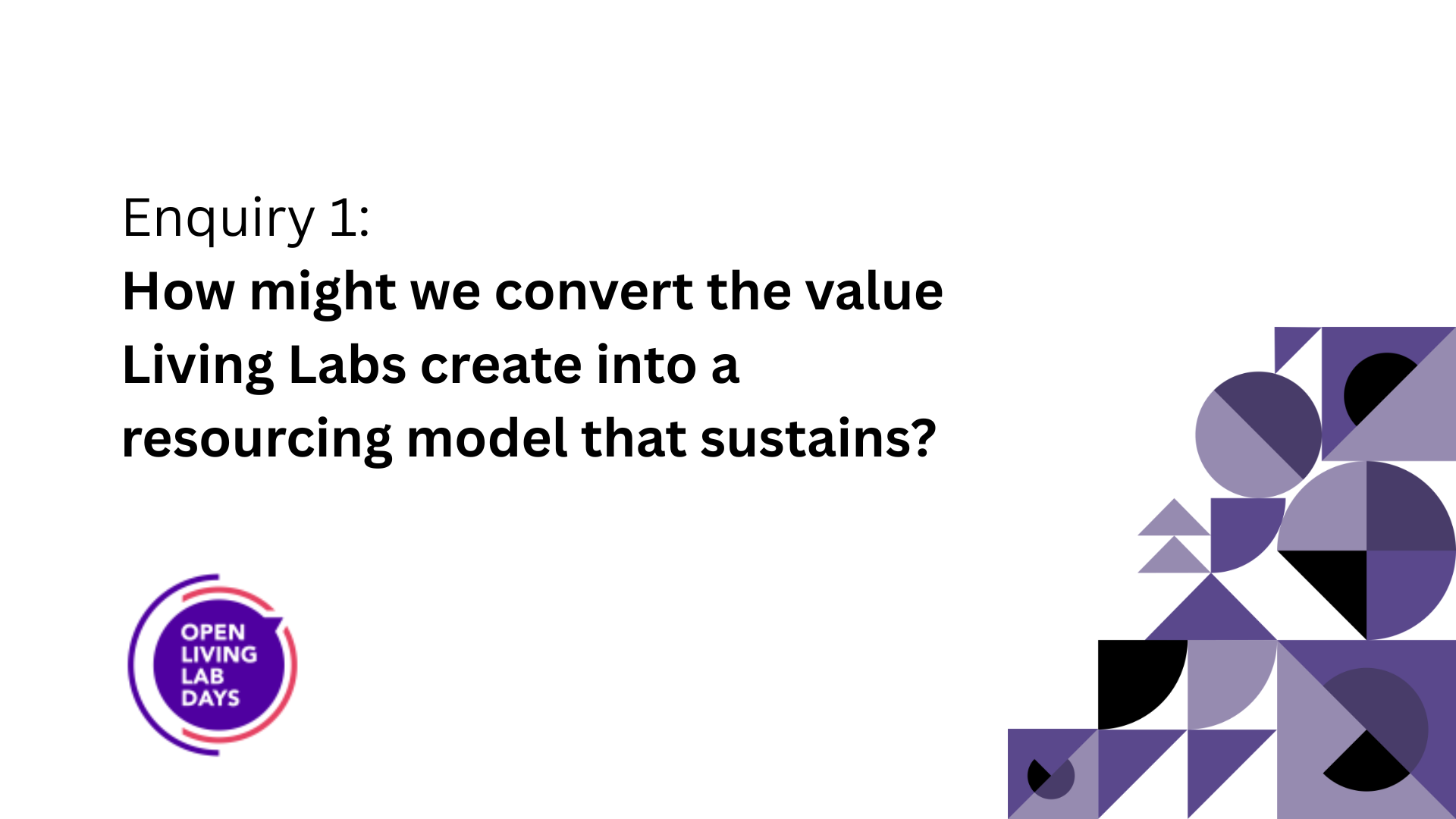
Enquiry 1: How might we convert the value (University) Living Labs create into a resourcing model that sustains?
University Living Labs cannot rely on executive goodwill as their primary business model. Executive support is important, and it is worth having, but it can also evaporates with a restructure or a shift in strategy.
The awkward part is that this is not a value creation problem. University Living Labs generate value across education, research, operations, community engagement and the unlikely partnerships that form around a shared societal challenge. Almost none of it naturally converts directly into funding for a supporting infrastructure that enabled it. The value shows up in somebody else's ledger, or in no ledger at all.
So the enquiry is about conversion rather than creation. Which value flows can be turned into a sustainable resourcing model, who holds the risk while that is being built, and what does a ULL need to provide as internal or external validation to get there?
I do not have a session for this one. It is the question I will be chasing in other people's sessions, in the networking village, and over coffee. Find me if it is yours too.
Enquiry 2: How might we mature towards a complexity-informed practice of scaling?
Scaling in our field can sometimes default to discussion of 'validated' products, policies, services and infrastructure: build the thing, prove the thing, scale it out to more people.
Last year there was much more focus on 'scaling up' - regulatory sandboxes, policy design, and conversion of insights gained in living labs into civic institutionalisation.
The research does not really support these as the only two pathway for the kind of change Living Labs pursue, and most practitioners I talk to know it from experience.
I have been working on this in my Alt-Scaling fieldnote, drawing on the scaling out, up and deep literature and on the ways Labs actually propagate: through people, practices, norms and relationships that travel further than any single intervention does.
 Sam Rye
My first Garden Talk is a live test of exactly that alternative.
Day 1: 13:15 Garden Talk with Heleen Geerts:
Towards An Open-Source Student Unit for Living Labs: Seeding the Next Gen of Lab Practitioners. What if every university had access to a shared, open-source student unit design, a ready-to-adapt model for involving higher education students directly in Living Lab practice? And what if we connected those up for peer-to-peer learning?
Opting for an open source design approach rather than keeping it proprietary or licensing it, is a deliberate scaling choice. So is scaling through other practitioners rather than a market-oriented option.
Find us in the Garden!
Enquiry 3: What if the 'Project' is the wrong unit to fund and evaluate by? What are alternative options?
Living Labs inherit the project as their default unit of work, funding and evaluation, largely because that is how money arrives. What becomes possible if we treat relational infrastructure, collective intelligence and long term anchoring processes as the primary units to focus on instead?
To be clear, I am not arguing against doing projects. I am arguing that the project is a poor container for the type of longevity that actually produces enduring change in the world (it's better for complicated problems than complex challenges), and that this single inheritance of 'projectification' quietly causes the symptoms the previous two enquiries address. You cannot fund relational infrastructure with project money, which is Enquiry 1. You cannot scale impact by treating it as a transactional, causal relationship, in complex challenges - which is Enquiry 2.
This is where my work on relational infrastructure meets my work with Possible Now, and it is the subject of my second Garden Talk.
Day 2: 10:35 - Garden Talk:
AI for Collective Intelligence: Learning Across a Global Impact Network. How can AI augment Living Lab approaches to help an innovation ecosystem learn from itself, without flattening the relational, place-based intelligence that makes it powerful? Drawing on work with Possible Now, a global network from the #ShiftThePower movement, this is a conversation about early experiments in AI-augmented collective intelligence and where the potential and the pitfalls lie.
A network learning from itself is about as un-project-shaped as work gets.
Come with your curiosity, your questions, or your own experiences of networked learning and AI, augmented or otherwise.
Enquiry 4: How might the cultural and intellectual depth from across Aotearoa New Zealand, Australia and the Asia-Pacific seed a new evolution of Living Lab practice?
Our field's canon, its definitions, evaluation frameworks, accreditation criteria and the funding instruments that carry them, was largely built in Europe and North America, and has been deepened in the last two decades in Euro-centric worldviews. That is not a bad thing, it's what happens when a field forms with a central locus of place and funding. But the model travels now, and the scaffolding travels with it, certain biases and assumptions will travel with it - invisibly inside the practice.
I am writing this from Wurundjeri Woi Wurrung Country, and have worked across Australia, Aotearoa New Zealand and engage broadly with practitioners from across the wider Asia-Pacific. Our field has a lot of language for co-creation, reciprocity, stewardship and long time horizons. Yet the cultures of this region have practice, protocol and accountability structures for them, refined over tens of thousands of years.
So the enquiry is not how the existing field "accommodates" diverse perspectives, because accommodation implies absorbtion. The enquiry is about what actually changes in the practice when other cultural perspectives, values and worldviews shape it: what we measure, who holds the knowledge that gets produced, what counts as a result, who a Lab is accountable to, and not who is termed a "beneficiary" but how meaningful participation and power sharing is embedded. My honest belief is that this makes for a richer, more diverse and considerably stronger global field of action, not merely a more polite one.
Two things I want to be straight about. Firstly, indigenous knowledge is not mine to speak for, and secondly the useful version of this question is one I ask about our field's tension between the field's global aspirations and risk of hegemonic practice if we don't engage critically in pluriversalism and reconciliation.
As I've engaged across the last year or so in working groups, professional course design and the membership accreditation process, I have noticed the tension of certain cultural assumptions rising through language, structural orientations, and omissions of key aspects which raise an eyebrow or two in my part of the world. This is the point, rather than an awkwardness. You notice the shape of a frame most clearly while you are filling one in.
Like Enquiry 1, this one has no session. Both are corridor conversations or those to be had in reflective moments outside the conference sessions - perhaps that may be the right modality to ease into them anyway.
One Ask
Both Garden Talks are conversations rather than presentations, and the first one has a specific ask attached.
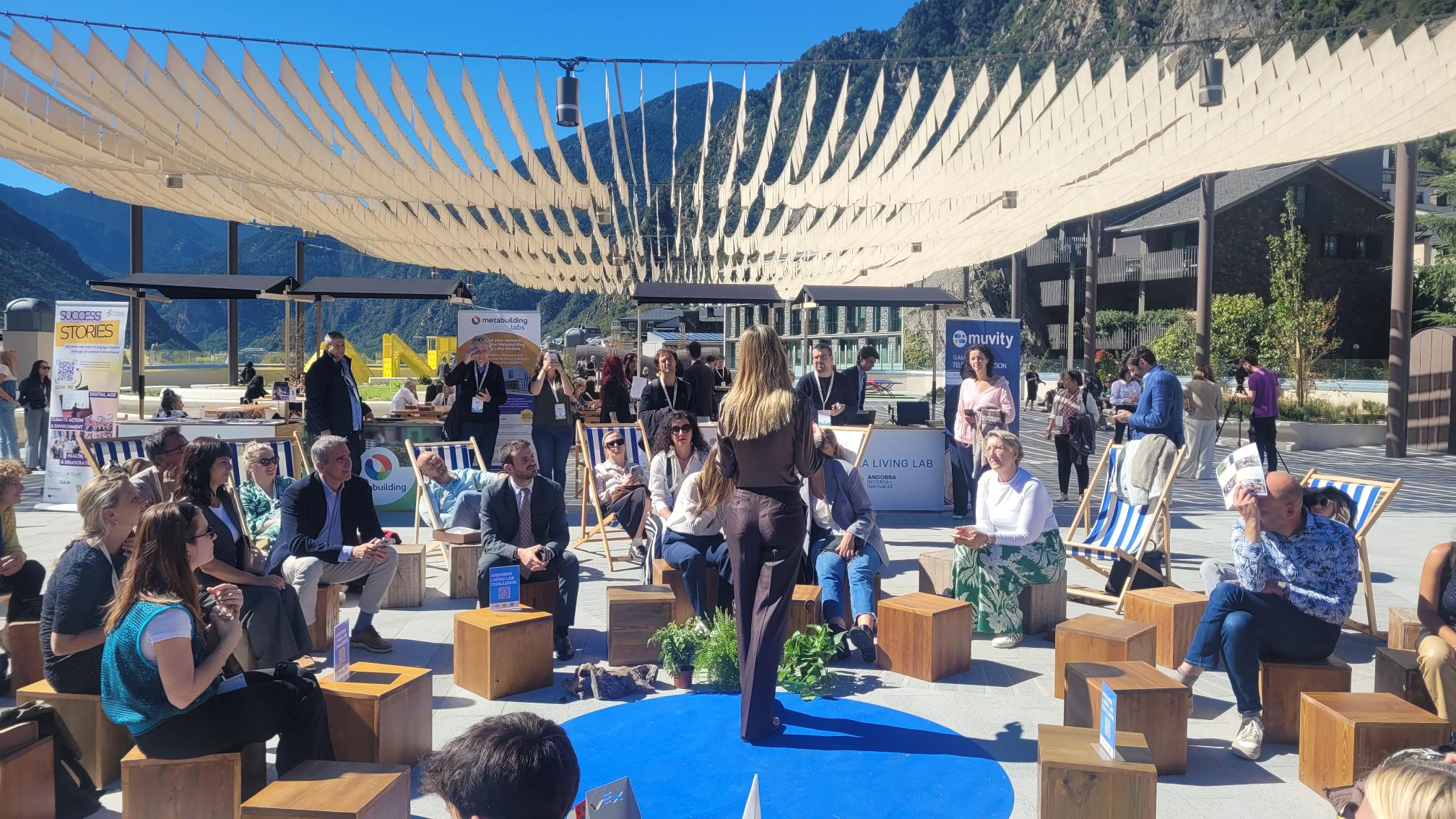
I am looking for people working in Universities who are interested in co-creating an open-source Living Lab student unit: a shared design that any of us can adapt to our own institution, curriculum and context, potentially even connecting the students studying it through peer exchange - and potentially creating a network of educational leaders around the world as well.
If that is you, or might be, come and find me in Antwerp. Or say so before you arrive, so we can make the most of the time.
Keen to connect?
If you are heading to OLLD26 and want to say hi, find me at one of the Garden Talks, in the breaks, or drop me a DM on LinkedIn and we can grab a coffee.