Fieldnote: Alt-Scaling - towards an impact-oriented framework
Exploring the maturation of scaling practice in living labs, social innovation labs and other challenge-led approaches


Today’s world faces massive challenges such as climate change, housing crises, and deep inequalities that traditional methods of problem-solving can't handle. We need an urgent and rapid acceleration of innovative responses that address the systemic nature of the challenges at hand, not just symptoms.
This is very much a fieldnote, but I'm working toward developing something a little more coherent over the coming months. If you're familiar with some of the context and you want to jump down, you will find a first cut of an integrated Alt-Scaling Framework which aims to help social innovation, systems change, living lab / social lab and aligned practitioners mature their discussions (especially with funders) and better design initiatives with a more holistic understanding of "scaling".
What is Scaling?
Scaling is the process of adjusting, measuring, or increasing the size, amount, or importance of something.
Scaling - Context & Critique
I've been down the rabbit hole on the "Lean Impact" and "Social Enterprise Business Models" scaling out approaches (mostly market-oriented), and I feel they have some merit in certain situations.
But what we know with absolute clarity, is that not everything worth doing in the world is valued by dominant economic systems and markets. Just look at pay rates for teachers, childcare workers and health sector workers. Don't get me started on how we treat the more-than-human world. We don't value activities in line with the value they create to bring about the kind of world where we address deep inequalities and have a thriving planet.
So, I feel we can't approach the acceleration of social and environmental impact through the lens of traditional commercial framing of "Scaling Out" (reach more people with the solutions), regardless of how well they work for some people, alone.
Why have we got caught in this notion of 'Scaling Out' when we think about the impact needed to address the challenges of the day?
Well of course, neoliberalism has swept many westernised countries and capitalism is the water many of us live in. Over the last 75+ years the "bigger is better" mantra of the private sector, prioritising growing numbers of people reached to increase profit, has dominated discussions. There are numerous examples of companies providing tech platforms, products & services and turning them into globalised juggernauts.
For many social and environmental challenges (often stemming from this economic system), this relentless focus on magnitude is often sub-optimal because it overlooks critical trade-offs:
- Sacrificing Equity for Reach: pursuing ever-higher numbers does not guarantee success and must be balanced against the need for equity of outcomes. Scaling efforts focused solely on size may neglect marginalized communities or create uneven distribution of benefits (at worst, actively exacerbating inequality which creates greater challenges).
- Transactional vs Relational responses: many challenges cannot be solved by the transactional business models underpinning growth of products and services of the private sector, and instead need different models to underpin their efforts. In some cases, the skills needed to deliver responses which create social and environmental value aren't always quick and easy to learn, and many require years of training yet yield lower pay.
- Slow and Inconsistent: reliance on a strict replication strategy is typically a "slow growth strategy" and it is relatively rare to achieve the same, consistent results at new replication sites, meaning that the growth of the challenge may outstrip the ability to replicate solutions.
Enter the Labs and Challenge-led Innovation sector
I see this as some of the analysis which has spurred the development of the sector (if we can call it that?!) where I've spent my last 15+ years - Social Innovation Labs, Living Labs, and other forms of Challenge-led Innovation.*
First and foremost, Labs and Challenge-led approaches aim to create space to develop an array of responses, experiments and solutions - often they are explicitly focused on changing the dynamics of a system, whether that's relationships, policies, social norms, or other patterns which hold a complex challenge in place.
These approaches don't necessarily look to identify "silver bullet" solutions - sometimes their efforts are focused solely on a particular place (such as Toronto) or challenge which spans places (e.g. Housing crisis). Whilst they may be looking to Scale Out, they are often looking first and foremost to expand or deepen their impact - so let's take a closer look at how they're approaching that.
Multiple forms of scaling


In 2015 the influential paper by Darcy Riddel & Michele Lee-Moore (on behalf of JW McConnel Family Foundation & Tamarack Institute) [1] explore this question from a social innovation lens, and found that many initiatives were expanding impact through different means, and they coined the terms:
- Scaling Up - impacting laws and policy
- Scaling Out - impacting greater numbers
- Scaling Deep - impacting cultural roots
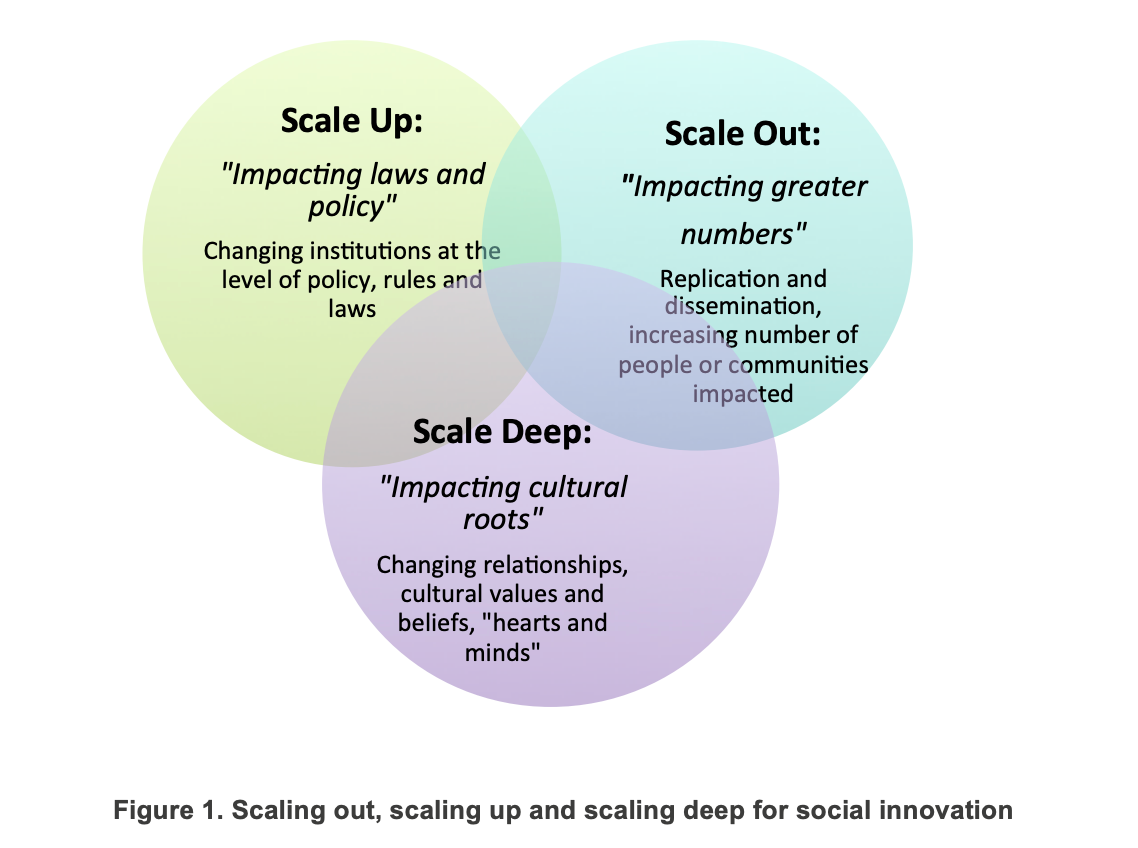
Since then, there's been various work done on better understanding these different types of scaling, and some great pieces exploring additional angles. A few of my go to's are these:
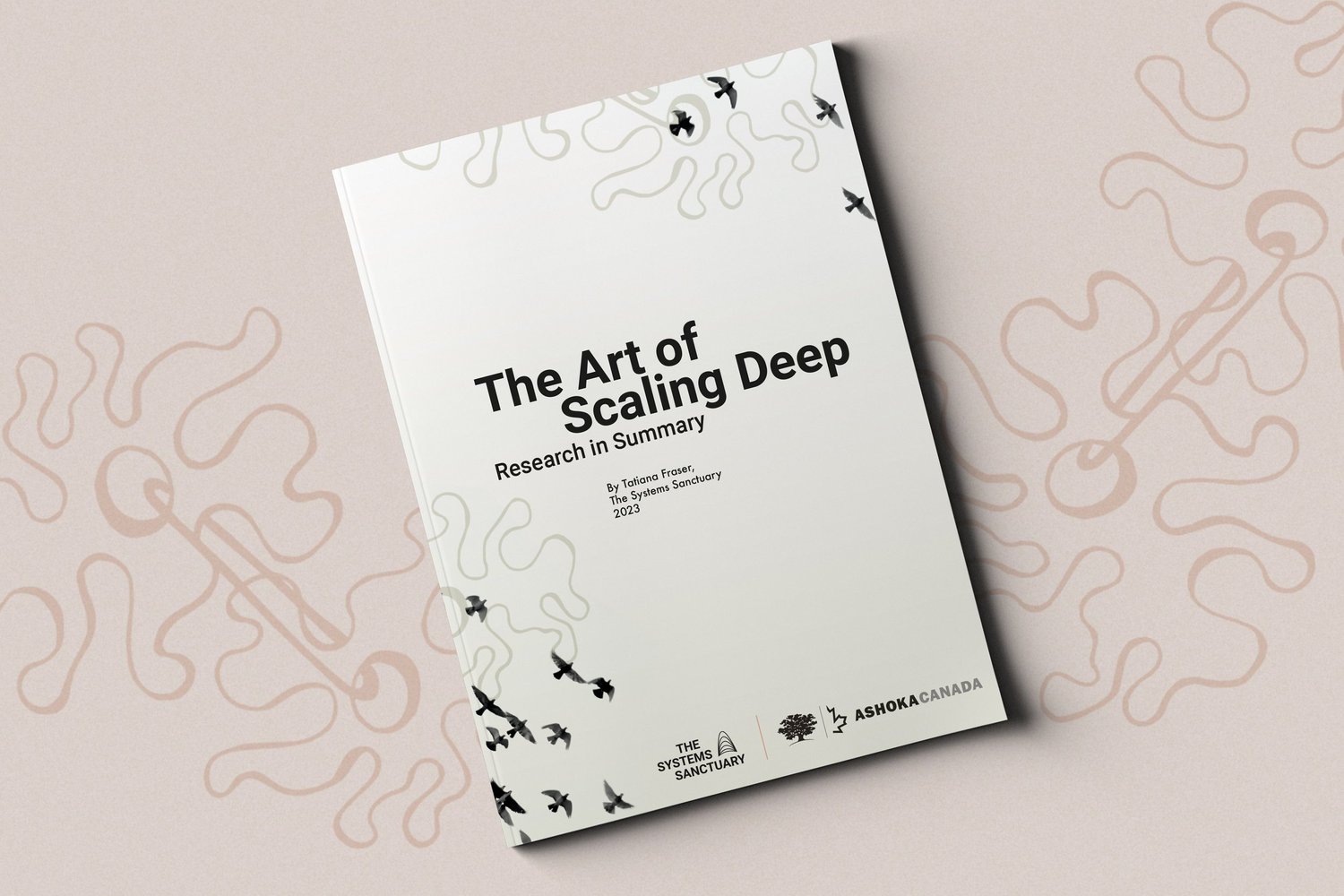
Tatiana Fraser, Systems Sanctuary - Scaling Deep
The Art of Scaling Deep [2]:

The Scaling Deep Inquiry [3]:

Gord Tulloch, InWithForward - Problematising Scale
Problematising Scale in the Social Sector [4]
 Gord Tulloch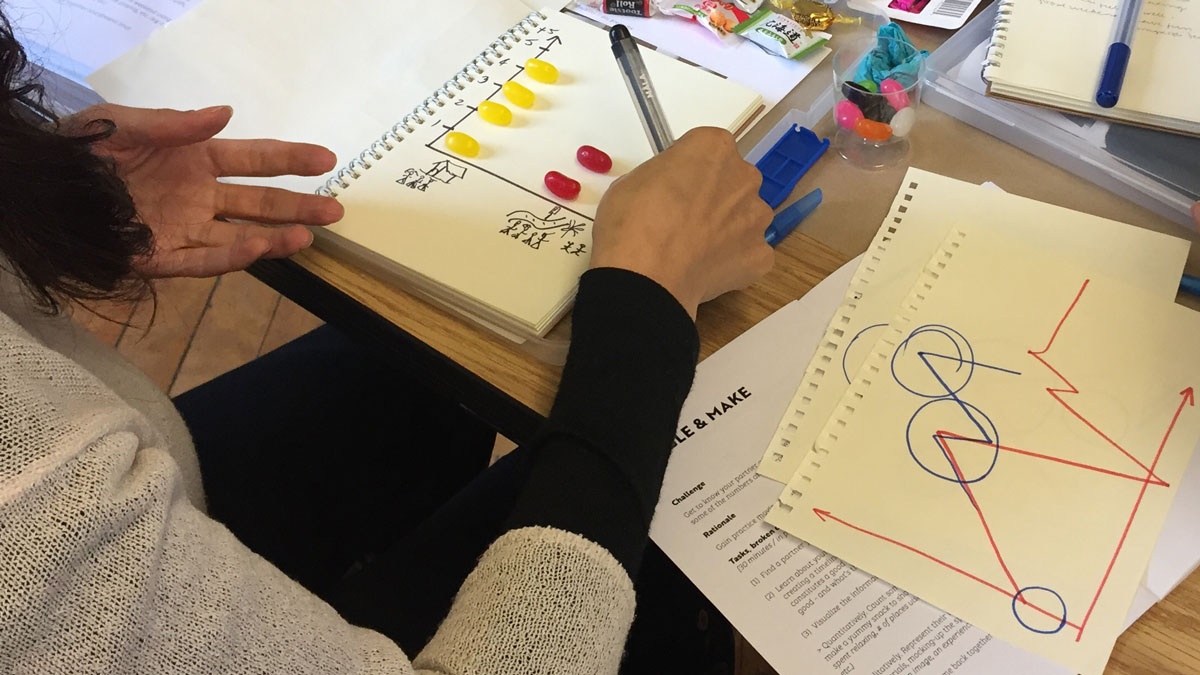
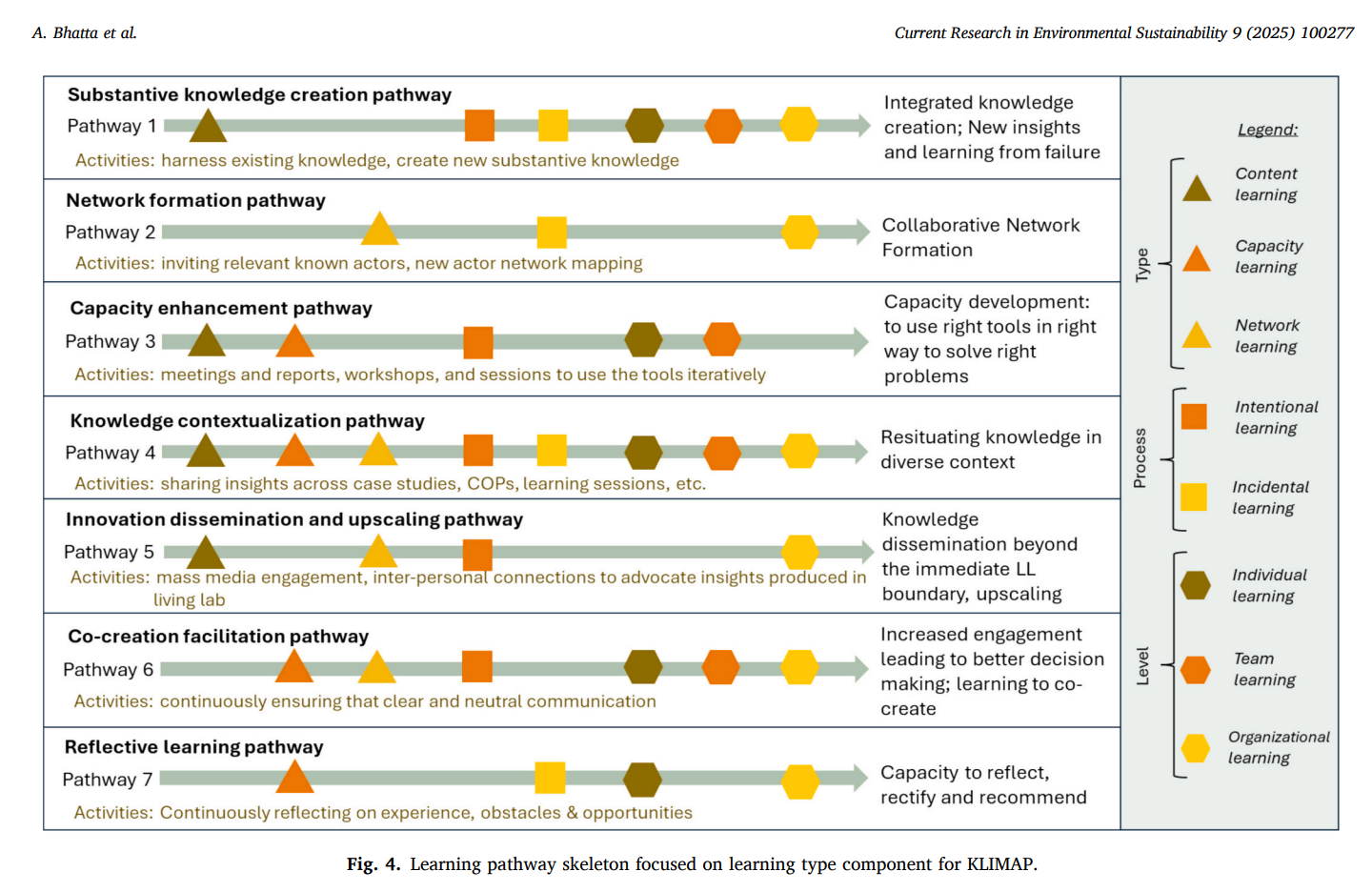
Astha Bhatta, TU Delft - Learning Pathways in Living Labs
Astha Bhatta is exploring different types of learning generated in Living Labs, which I see as a type of Scaling - but not always Scaling Deep. You can read Astha's journal article here (open access). [5]
Astha and her co-authors proposed the following areas of learning in Labs:
- Knowledge creation
- Network formation
- Capacity enhancement
- Knowledge contextualisation
- Innovation dissemination and upscaling
- Co-creation facilitation
- Reflective learning
Open Social Innovation
A couple of interesting articles:
- Open social innovation: taking stock and moving forward - link to open access article [6]
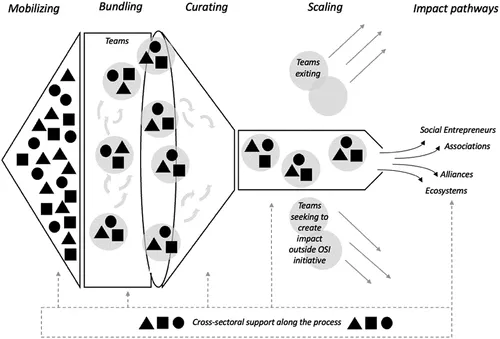
- Open social innovation: A systematic literature review and future research agenda - link to open access article [7]
TIPC - Transformative Outcomes
Theory of Change meets the Multi-level Perspective for Transitions in the Motion Handbook which utilises the transformative outcomes framework [8]
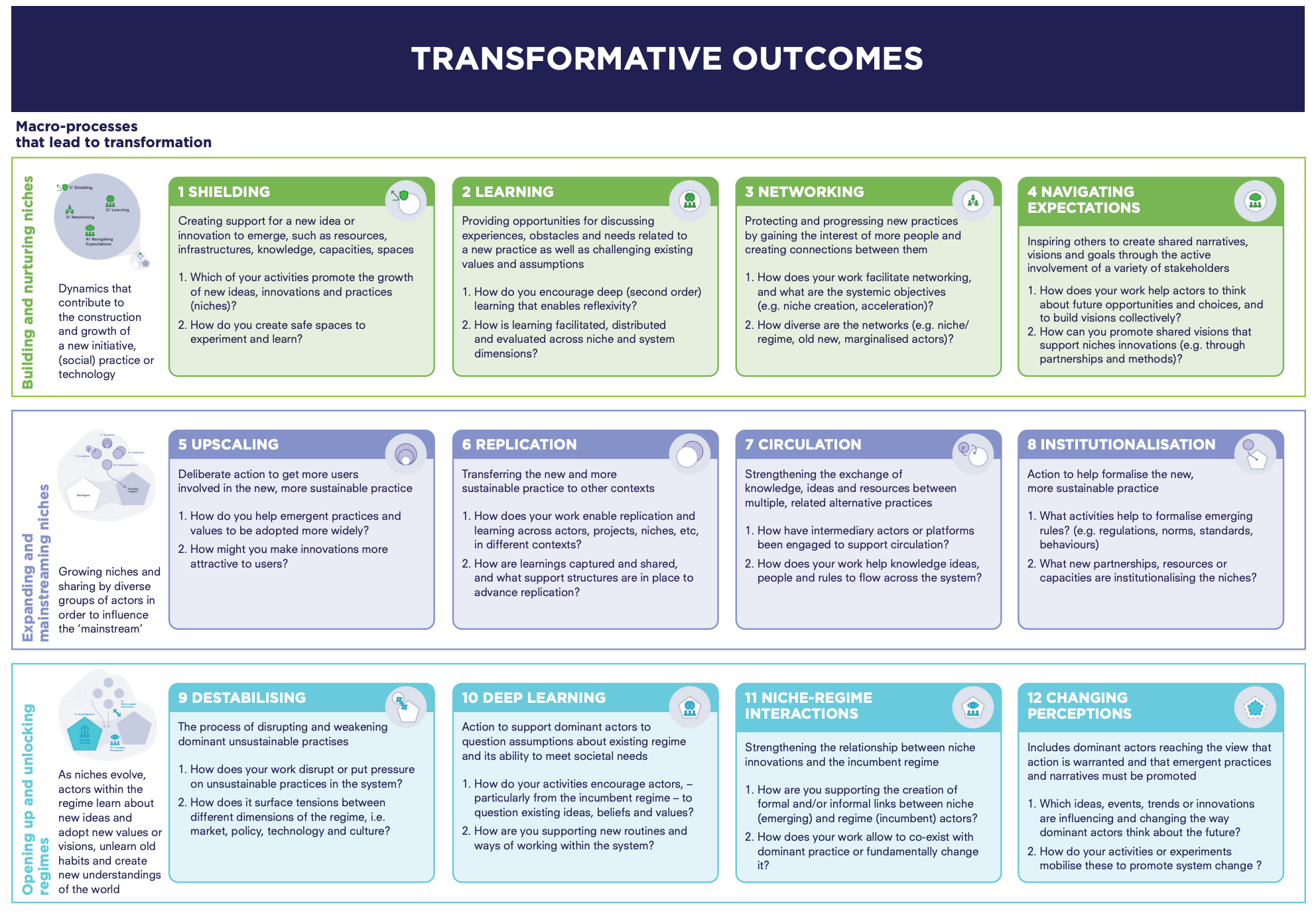
So, we can see that when we talk about Scaling in the Lab & Challenge-Led approaches, we're not just talking about Scaling Out - there's other dynamics at play to expand the impact that both the Labs (as platforms and processes), and the initiatives, responses and experiments they generate, will have.
Crucially, we need to consider Scaling in the context of how change happens in complex systems, which is dynamic, context dependent and non-linear.
The genesis of further exploration
This fieldnote has a direct line back to the Future of Labs Gathering in Canada in 2024, where there was a fascinating session focused on whether or not Social Innovation Labs should focus on 'scaling'. You can see the full report here [9], but I've pulled out Page 32-33 below to illustrate the output.
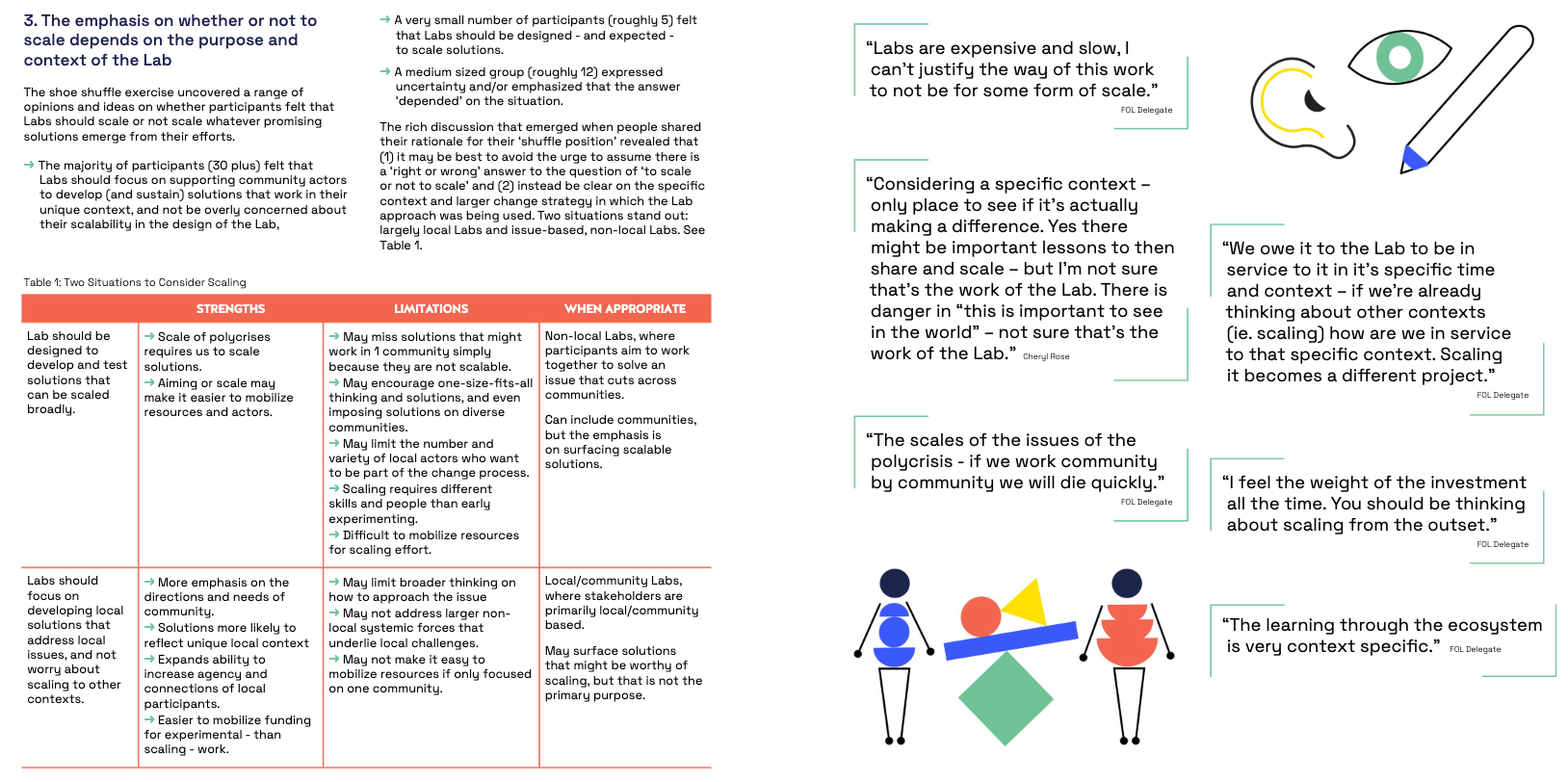
What I found fascinating about this discussion was that the discussion of Scaling was implicit. It was never fully clear to me if we were talking about Scaling Out initiatives generated in a Lab, talking about the Scaling Deep work of the Lab itself, or something else? It's been working away at me ever since, and I've been percollating how to respond - this is a next step.
Likewise in my role at the University, I'm seeing many Living Labs grapple with how to explain the work they do, or make the case for this way of working in the first place.
I started to explore a generalised Impact Framework for orchestrators recently here [10]:
 Sam Rye
OK, so let's get into it. What would it look like to integrate some of these different ideas for Social Innovation Labs, Living Labs and Challenge-led approaches, into an integrated framework for scaling?
Towards an integrated Alt-Scaling Framework
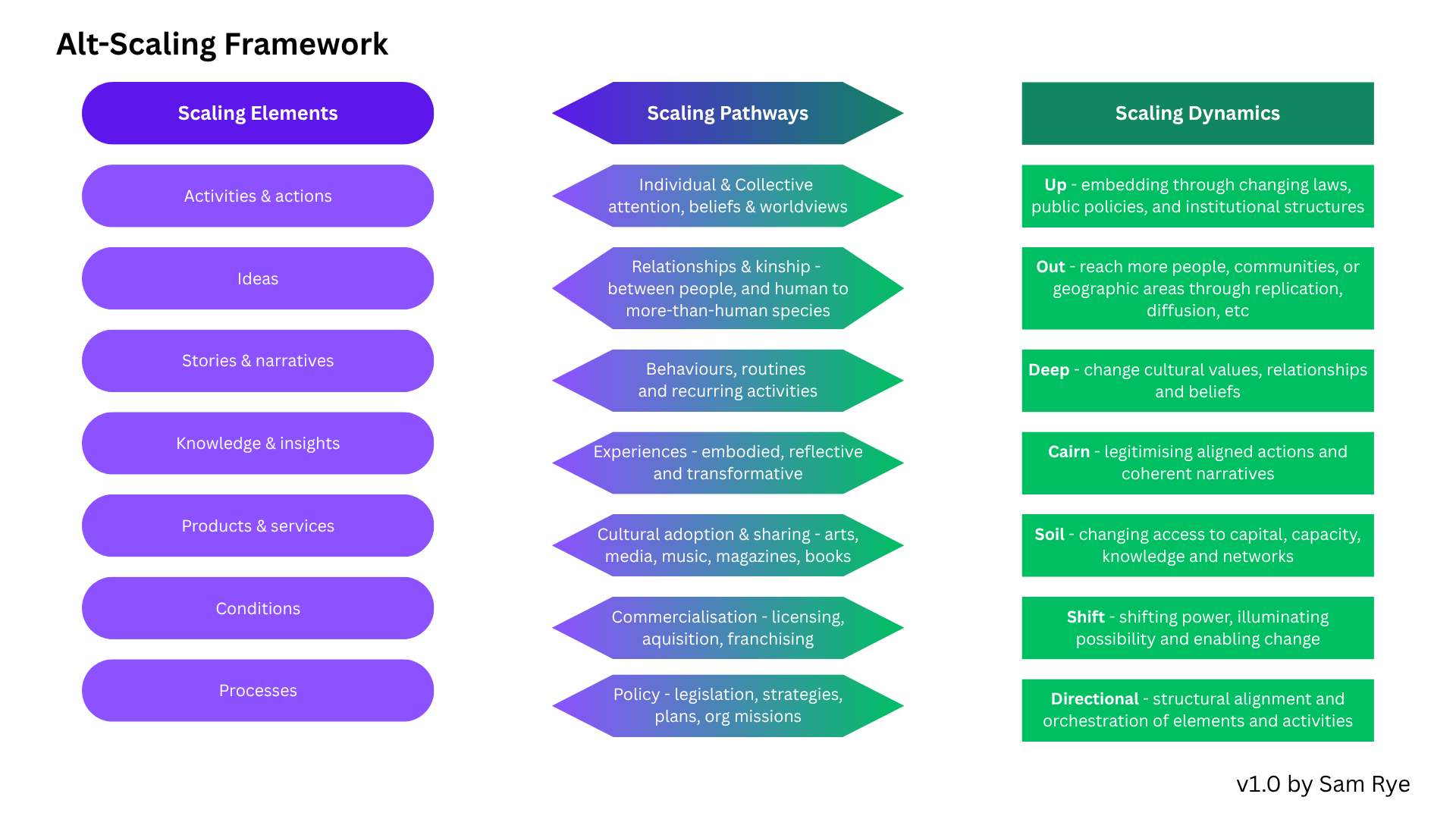
As I started working through this framework, I filled some non-exhaustive content to illustrate it.
The three parts are:
- Scaling Elements - what can be scaled?
- Scaling Pathways - what are the paths to scale?
- Scaling Dynamics - what type of scaling mode is happening?
Scaling Elements
When looking at the ability to scale something, funders are often looking for or expecting a 1:1 relationship between the element, and the impact it has had when tested.
For example:
So let's take the above example. The impact associated with the element is not always infinitely or evenly scalable across different contexts, and as we explore a range of different elements, we can see they can't all be scaled using the same type or pathways to scale.
To advance and mature our thinking, we need to be more specific about what can be scaled. As I explored this, across a range of models and evidence, I started to detail out a number of elements which continue to surface
Scaling Elements - example content
- Activities & actions
- Ideas
- Stories & narratives
- Knowledge & insights
- Products & services
- Conditions
- Processes
Scaling Pathways
Getting granular about pathways the elements can use to scale is also useful because whilst they're not 'mechanisms' (i.e. change / impact isn't always linear and predictable), they do become a menu we can use to build a more nuanced complexity-aware scaling approach.
These really speak to the 'how' - where we go from "something that is working" to then consider a way that scaling activity may grow the impact. Similarly, I aimed to capture some of the common pathways - though these are non-exhaustive:
Scaling Pathways - example content
- Individual & collective attention, beliefs & worldviews
- Relationships & kinship - between people, and human-to-more-than-human relationships (e.g. connection to country)
- Behaviours, routines and recurring activities
- Experiences - embodied, reflective and transformative
- Cultural adoption & sharing - arts, media, music, magazines, books etc
- Commercialisation - licensing, aquisition, franchising, trade & transactions
- Policy - legalisation, strategies, plans, organisational missions, etc
Scaling Dynamics
Finally I turned to trying to synthesise and extend the types of scaling dynamics I saw at play - going beyond Up, Out, Deep. As mentioned earlier in the piece, the likes of Gord Tulloch already suggested 'Scree' and 'Initial Conditions' as additional, and after some discussion with the Future of Lab community (shoutout to Darcy Riddell especially) I adopted the idea of "Cairn" as an alternate to "Scree" because of the grouping effect of legitimising aligned actions. Likewise I moved to "Soil" for "Initial Conditions" as it felt more aligned with the groundedness of the emerging typology.
The typology might still need some work, but is as follows:
Scaling Dynamics - typology
- Up - embedding through changing laws, public policies and institutional structures
- Out - reach more people, communities or geographic areas through replication, diffusion, etc
- Deep - change cultural values, relationships and beliefs
- Cairn - legitimising, protecting and connecting aligned actions and coherent narratives
- Soil - changing access to capital, capacity, knowledge and networks
- Shift - shifting power, illuminating possibility and enabling change
- Directional - structural alignment and orchestration of elements and activities
Examples of alt scaling framework
Let's work through a couple of examples with a little explanation for each, to see if it makes sense for people?
The Digital Service
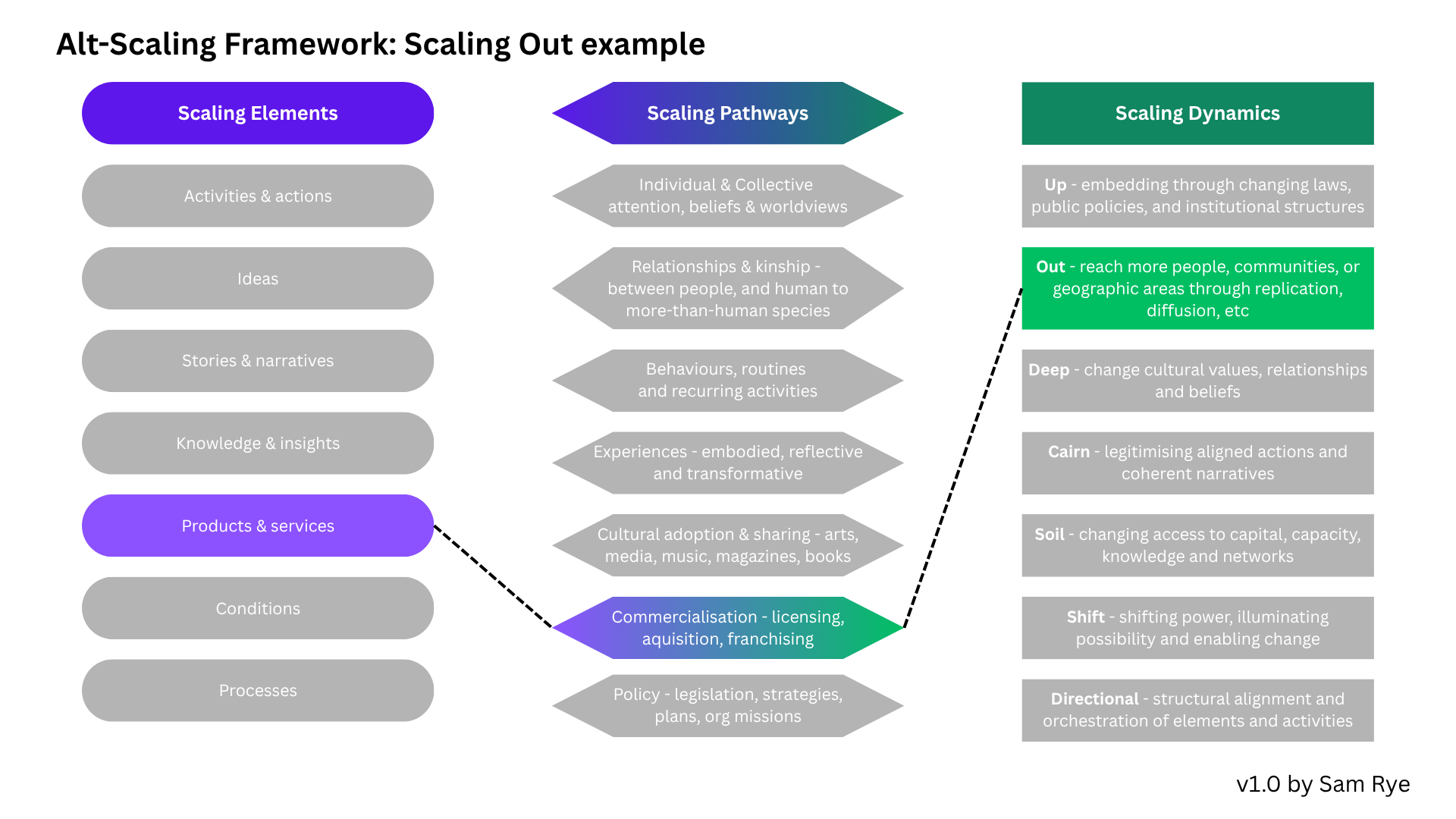
This example is the most basic and familiar for many - a digital service which utilising a commercial scaling pathway (sales) - a classic 'scaling out'. As we mentioned earlier - this comes with inherent challenges and trade offs.
The Insight Mobiliser
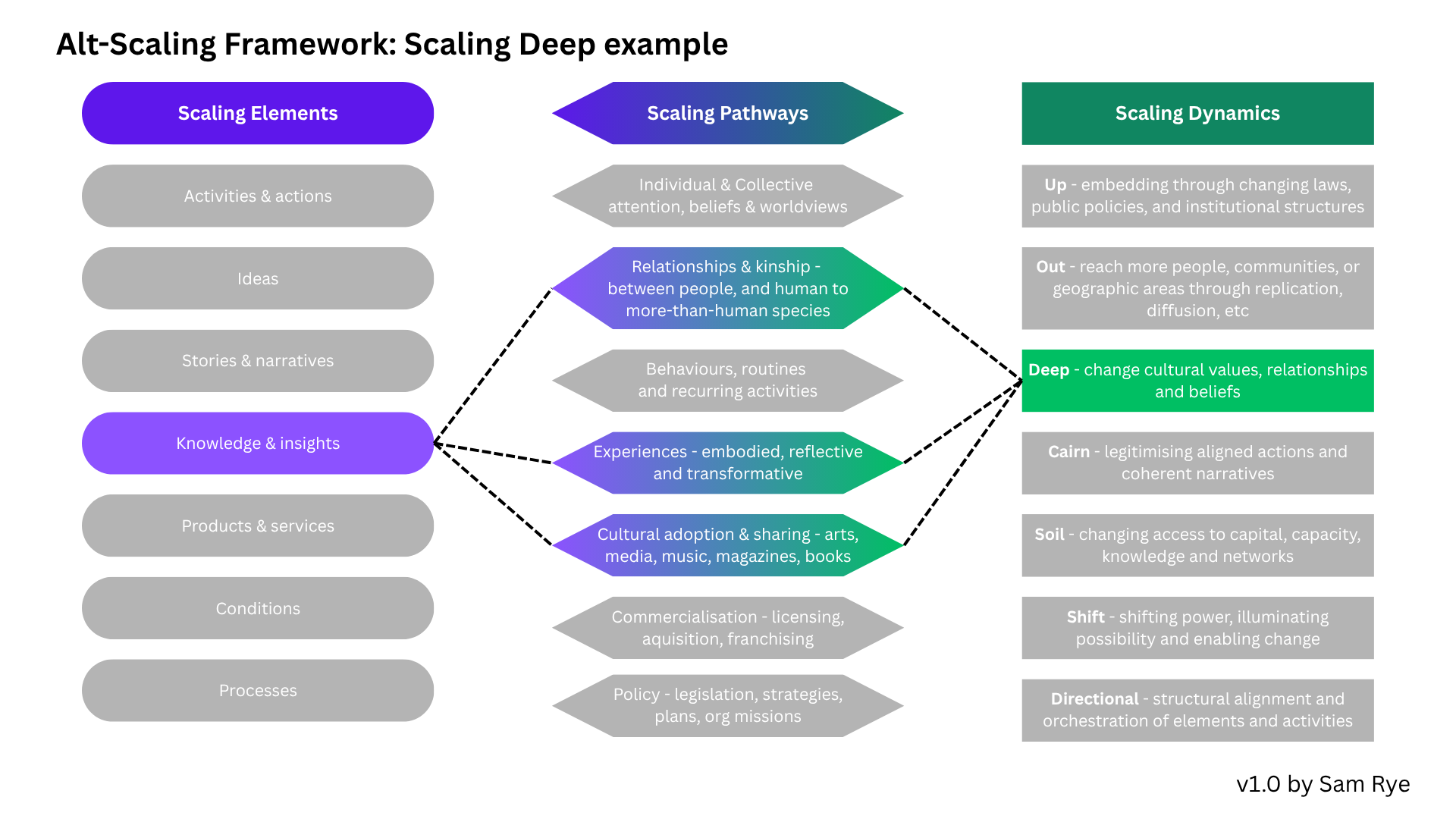
This is quite a different example, where I've imagined a new insight about regenerative food systems is intentionally mobilised through a fellowship program, leveraging relationship, experiential and cultural pathways, to scale deep - anchoring that new knowledge in a core team of leaders in the field.
The Narrative Demonstrator
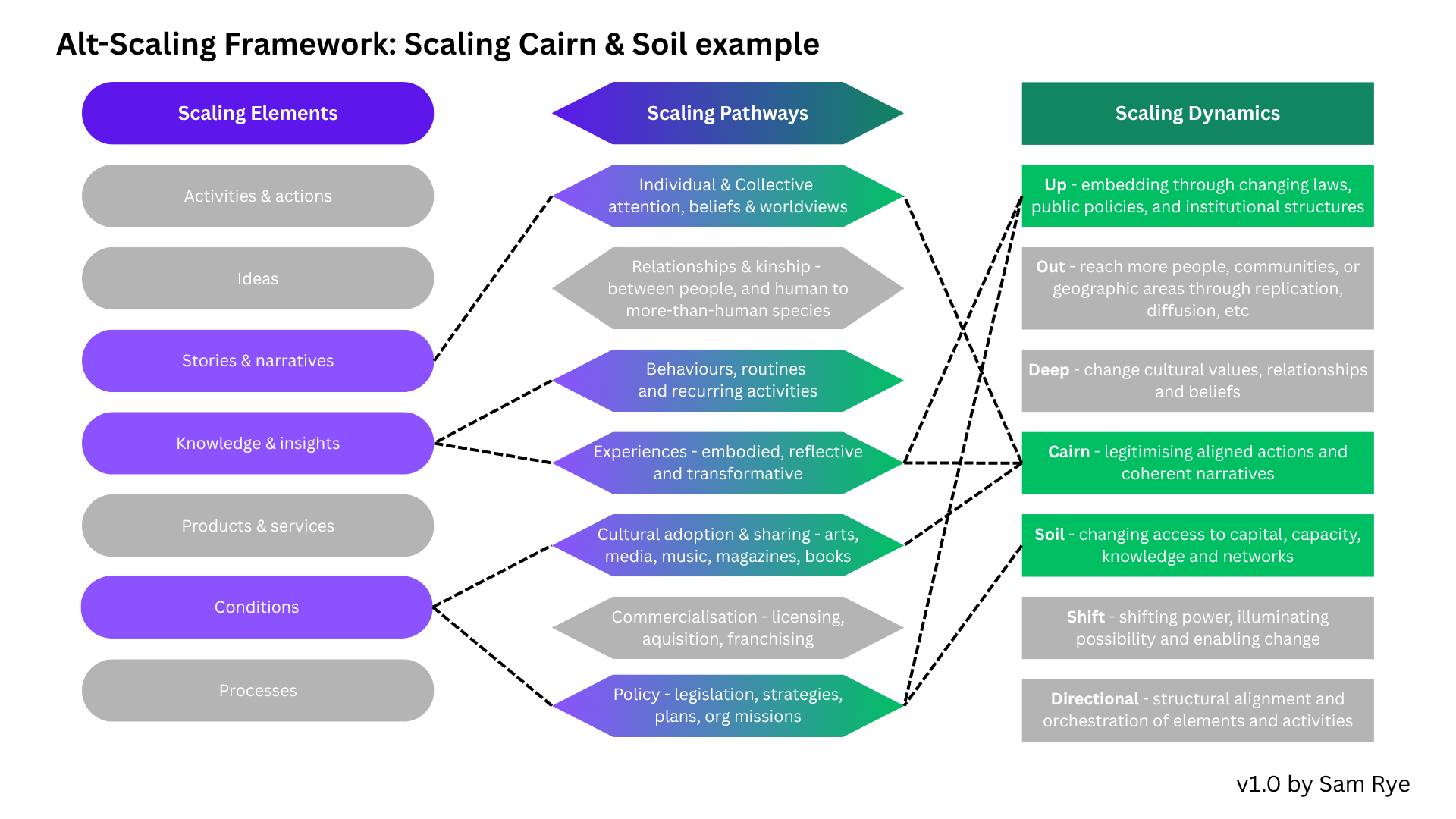
Different again, this is a more complex approach where addressing the regional climate-related risk is worked on through an think-do tank, utilising multiple approaches. The development of effective knowledge through research, a narrative change campaign, and climate adaptation fund are all used in concert through multiple pathways, to not only scale the soil, but also cairn through a portfolio of demonstration experiments, and scale up to affect public policy around climate risk.
Takeaways
We've explored the typology: Elements, Pathways & Dynamics.
This offers an integrated model for understanding and desinging for complexity-aware scaling in social innovation labs, living labs and other challenge-led innovation approaches. It's a starting point, and I accept it will need further work - but I needed to get this out to get some feedback from people.
The complex reality of this alt-scaling work indicates the need for infrastructures which act as platforms to support and orchestrate change initiatives, utilising this kind of framework to understand what should be advanced, what funding types would be needed, and which pathways and relationships should be built.
Would it be easier just to invest in "scaling out" products and services in a market-oriented logic? Sure. Will that address the scale, pace and diversity of change needed across social, environmental and economic dimensions to develop the types of futures we need? Absolutely not. Hopefully alt-scaling can help us become more mature, more nuanced, and ultimately - more successful in impact-oriented work ahead.
Footnotes
*Sorry this post is not going to give you a primer on this sector, but if you want some starting points - here's a couple of posts from the last year or two:
 Sam Rye
 Sam Rye
 Sam Rye
 Sam Rye
References
[1] Riddell, D., & Moore, M. L. (2015). Scaling out, scaling up, scaling deep. McConnell Foundation. JW McConnell Family Foundation & Tamarack Institute.
[2] Fraser, T. (2023). The Art of Scaling Deep - Research in Summary. The Systems Sanctuary.
[3] Fraser, T. (2025). The Art of Scaling Deep-Research in Summary. The Systems Sanctuary.
[4] Tulloch, G. (2018). Problematizing scale in the social sector (1): Expanding conceptions. InWithForward. October, 28, 2023.
[5] Bhatta, A., Vreugdenhil, H., & Slinger, J. (2025). Harvesting living labs outcomes through learning pathways. Current Research in Environmental Sustainability, 9, 100277.
[6] Gegenhuber, T., & Mair, J. (2024). Open social innovation: taking stock and moving forward. Industry and Innovation, 31(1), 130-157.
[7] Pacheco, J. N., Turro, A., & Urbano, D. (2025). Open social innovation: A systematic literature review and future research agenda. Technological Forecasting and Social Change, 216(C).
[8] Ghosh, B., Kivimaa, P., Ramirez, M., Schot, J., & Torrens, J. (2021). Transformative outcomes: assessing and reorienting experimentation with transformative innovation policy. Science and Public Policy, 48(5), 739-756.
[8] Weinlick, B., Reeves, P., Rubliak, R., Ryan, A., Perla, K., Cabaj, M., Kieboom, M. (2024). Future of Labs: Gathering Report & Recommendations For The Future Of The Next 10 Years Of Labs. https://www.actionlab.ca/future-of-labs-gathering
[9] Rye, S. (2025, June 20). Deep Dive: Innovation Orchestration - challenges, value & impact framework. Fieldnotes by Sam Rye | Social & Environmental Regeneration.