Coming alongside Possible Now
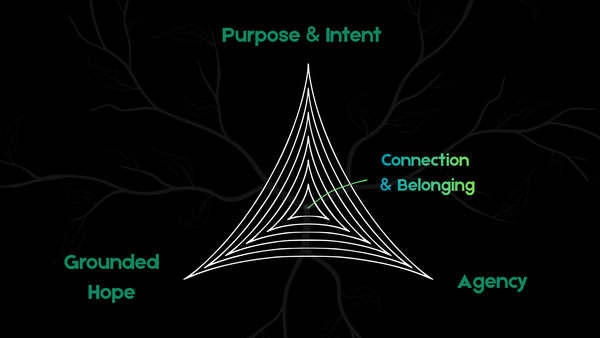
What might happen if we explore the development of relational infrastructure as an organising principle in the reimaging of a global network working towards a good society?
This post was originally published at Global Fund for Community Foundations.
It’s November 2024, Naarm Melbourne, Australia, and I was told there were a couple of people in town who I should really meet. Given I have a lot of faith in Ian Bird (from Community Foundations Australia at the time, and a member of the GFCF board), who was the person telling me I should head to the city to meet them, I agreed and teed up a time and a suitably Melbourne café. It was the first I had heard of the GFCF, but apparently their reputation had preceded them as I was aware of the #ShiftThePower work they were involved with.
After briefly greeting Jenny (Hodgson) and Barry (Knight) and steering them to the café, we settled into a conversation. I learned a little about their work around the world with non-profits, foundations and people striving for a good society in their home countries. Their deep humility struck a chord – the commitment to support not only a more community-led response to challenges, but to bring people together from across these different countries and communities, to connect the dots between their experiences and foster some degree of learning and solidarity.
As I said at the time – whilst I have ever so briefly been involved in an international development project or two – I don’t claim in any way to be from that sector. My work over the last 15+ years has really been rooted in Aotearoa New Zealand and Australia, looking at the processes and structures which support people to build trust and enable collaboration on complex, dynamic challenges like youth mental health, local food systems and climate change. But something about the way we each approached our work, the qualities we lead with, and the horizons we were focused on, felt aligned.
Southern Hemisphere summer came and went, but after a short break – we kept talking. Jenny and Barry had been talking with various people in their networks in the aftermath of the demise of USAID, and seeing patterns of discussion about “reimagining” international development. Discussions with Nairobi-based Suleiman Abdullahi had led to the early ideas of something they were calling “Possible Now” – a label-defying conversation about what is possible, now, from the relationships, resources and commitment in communities – or if communities were supported to lead change.
Whilst I wasn’t entirely sure what my role may be: this vision, this act of invitation, this commitment to bring together and connect – all of it felt familiar. It felt like the roots of the kinds of social labs and systems change initiatives I’ve been part of, supported and co-led before. I brokered a bit of space with my current work, Sustainability Transitions Lab, to come alongside the GFCF and Possible Now, and see if we could translate some of my experience and knowledge to support the early stages. As we talked across the oceans, it became clear there was common ground to explore.
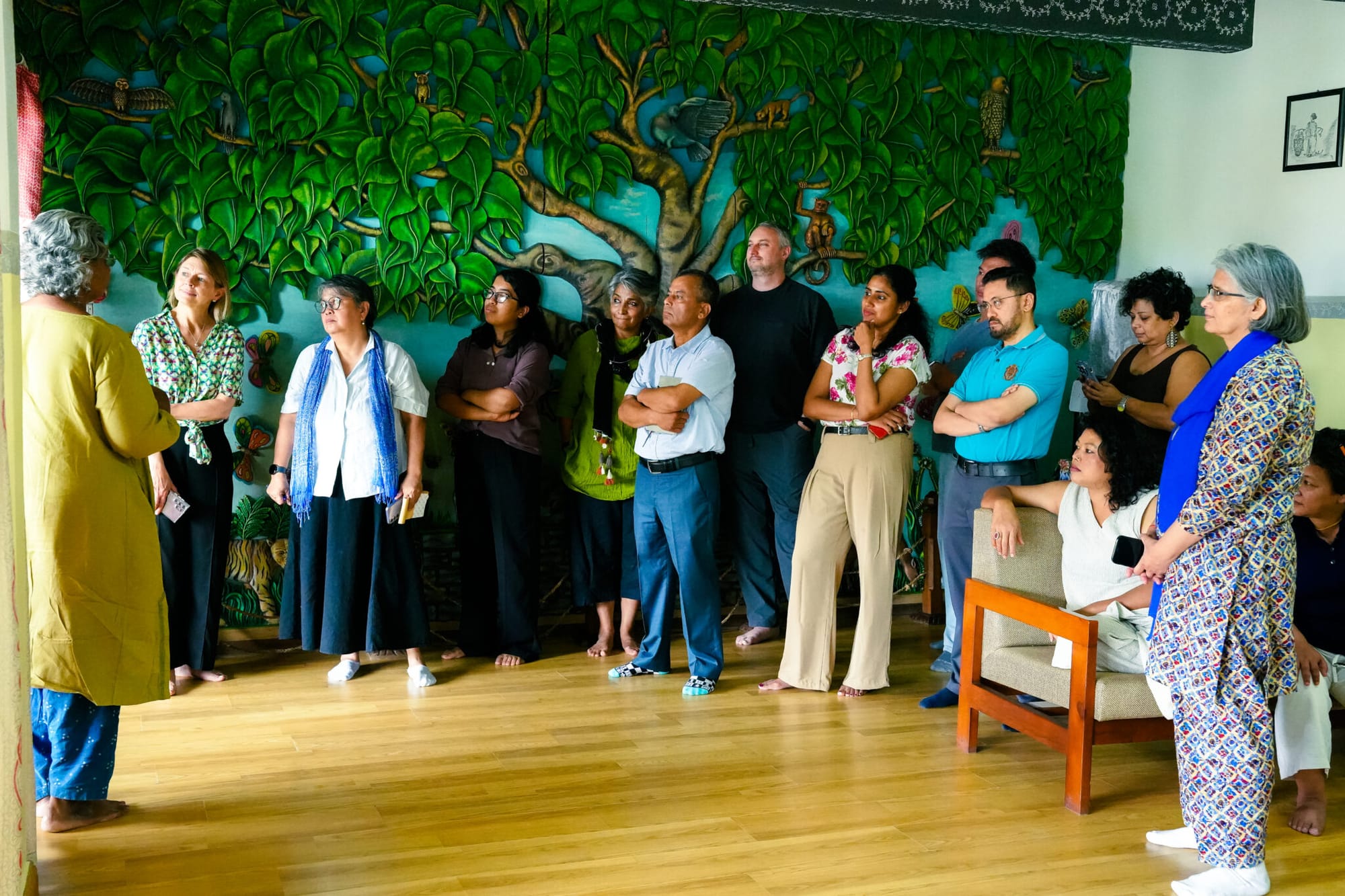
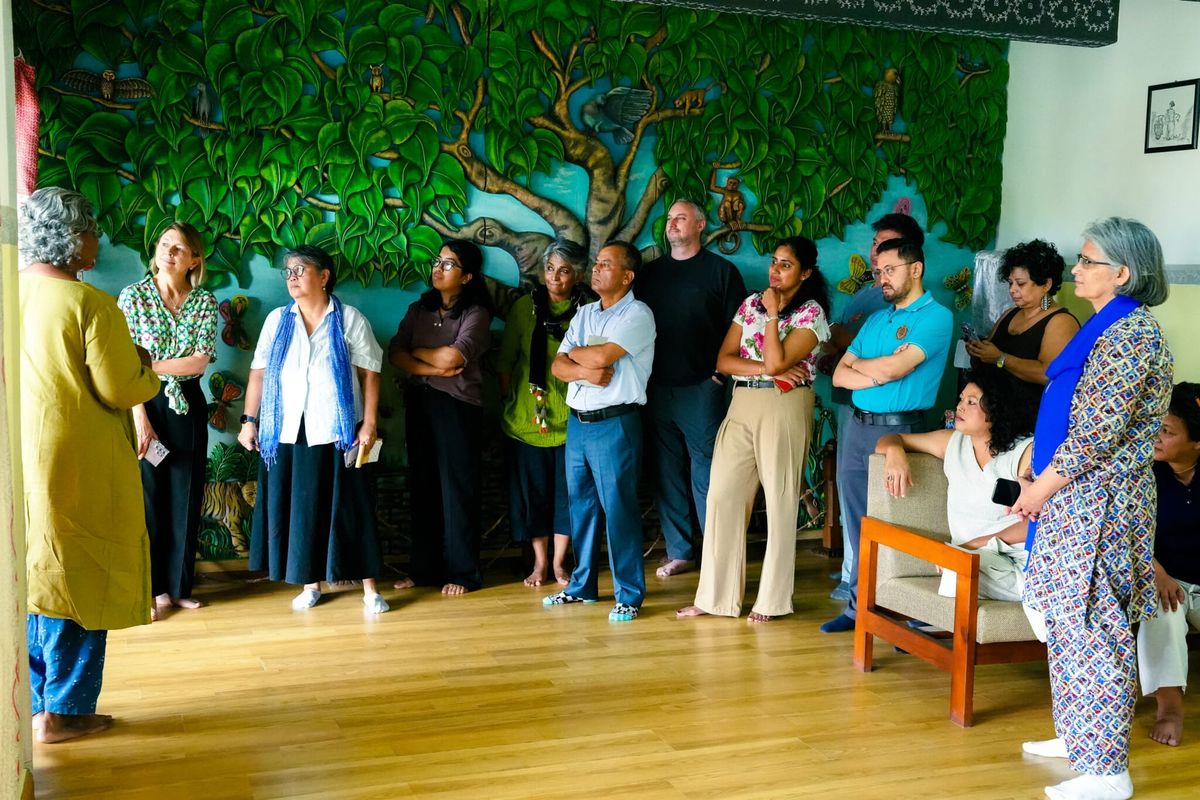
And so it was that I found myself in Nepal in June 2025, for one of the first Possible Now convenings – alongside brilliant and committed people who were striving for a good society with honesty and openness. I listened as participants shared their own community’s change work and personal experiences and listened carefully to each other too. Although our group was made up of people coming from different countries and contexts, slowly, commonalities and shared struggles emerged, as well as vastly different approaches. As I listened, probed and asked questions, my mind was percolating. By the end of that gathering, my heart full with new connections, I was left with a tantalizing potential of Possible Now…
What happens if we shift from seeing ourselves and our work as disconnected by geography, to being connected by shared purpose?
This question was at the heart for the rest of the year working on an experiment between GFCF and Monash – exploring the academic and practice-based literature to capture and lay out what might help us inform Possible Now, when it comes to both relational network activation, as well as complexity, systems change and transitions. We knew that we couldn’t simply “drop in” these sources – they had to be adapted and translated for the Possible Now network, so we hosted various online sessions to explore how the global network made sense of these concepts through their own actions and words. Through this process we were able to shape some of our understanding as a team, and to think about how we talk about and advance Possible Now.
So where to from here? Well, much like the #ShiftThePower Summit in Bogotá in 2023, the GFCF is planning to bring together people from around the world in another vital large scale gathering in Kathmandu, Nepal in December 2026. We’ll be there, and Possible Now will be on the menu, to continue to explore how we build collective power and energy together, to bring about that good society we know is possible.